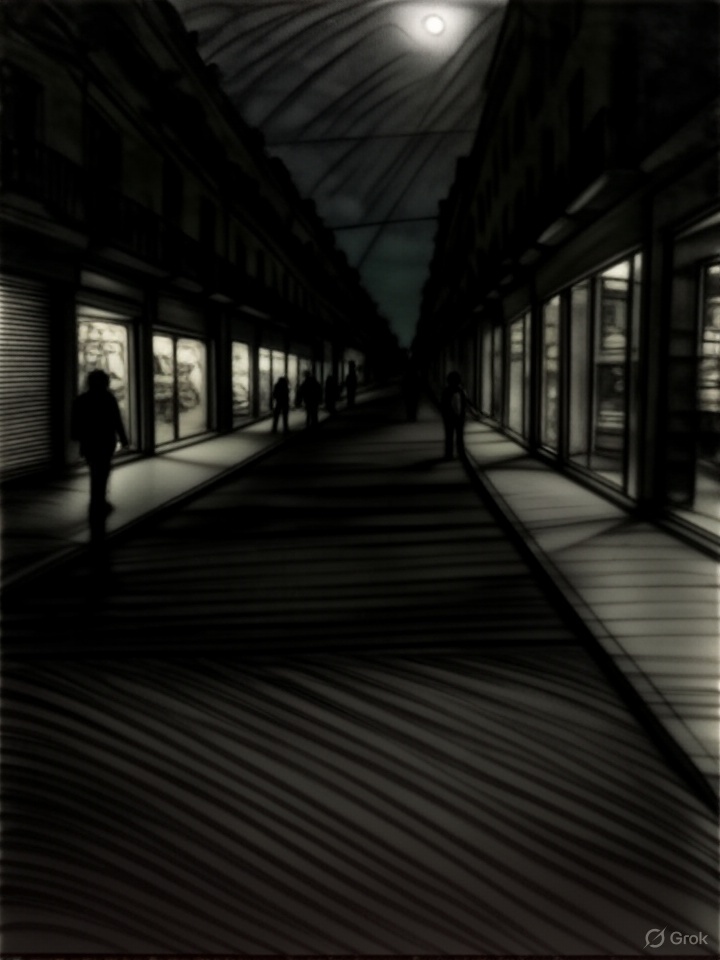
Spain recently experienced a widespread blackout that disrupted daily life across major cities and towns. While power outages are not entirely uncommon, this one raised alarms due to its scale, timing, and duration. Here’s a clear breakdown of what happened, what caused it, and what comes next.
The Incident
On [insert date], large areas of Spain experienced a sudden power outage. Cities including Madrid, Barcelona, Seville, and Valencia reported power cuts lasting between 20 minutes and over an hour. Public transportation, communication networks, and even hospitals were temporarily affected.
Root Cause of the Blackout
According to official sources, the blackout was linked to a transmission network disturbance, possibly triggered by:
- A failure in a high-voltage interconnection line connecting Spain with other parts of Europe (e.g., France or Portugal).
- An unexpected overload or automatic protection shutdown in the transmission system.
- In some reports, a wildfire or external physical event (such as a lightning strike) is suspected to have caused a fault in a key substation.
These events can lead to a “cascade effect,” where the failure of one part of the grid causes others to shut down to prevent equipment damage.
What Happened: Sequence of Events
The blackout was likely triggered by one of the following events:
- Transmission Line Tripping
A 400 kV line—either domestic or international—may have tripped due to:- A short-circuit fault (e.g., due to a lightning strike, insulation breakdown, or wildfire-induced flashover)
- Thermal overload, causing automatic disconnection by protective relays
- Fault current detected by distance relays or differential protection
- System Instability Cascade
Tripping of a heavily loaded line in a meshed system causes:- Sudden load redistribution to parallel lines
- If those lines are near thermal limits, further overloads and cascading trips occur
- Load-generation imbalance results in frequency drops (below 49.5 Hz for continental Europe standard)
- Underfrequency Load Shedding (UFLS)
As frequency drops, automatic UFLS relays start disconnecting non-critical loads to maintain stability.- UFLS is staged (e.g., 49.0 Hz = 10% load shed, 48.5 Hz = 20%, etc.)
- Helps buy time while generation ramps up or other corrective actions occur
- Islanding or System Separation
Part of the network may have been electrically islanded, losing synchronization with the main grid.- In an islanded state, if local generation < load, voltage collapse or blackout ensues
- Synchronization restoration requires coordinated reconnection
Power System Protection Mechanisms Involved
Key protection and automation systems that may have responded:
| System | Function |
|---|---|
| Distance Relays | Detect phase faults along transmission lines |
| Differential Protection | Detect internal faults in transformers and buses |
| Out-of-Step Relays | Prevent loss of synchronism in generators or islands |
| SCADA / EMS | Monitors grid in real-time and issues control commands |
| Remedial Action Schemes (RAS) | Automated actions like load shedding or generator tripping |
Inertia and Frequency Response
Spain, like many European countries, is increasingly reliant on renewable sources (wind, solar), which offer low system inertia. During a disturbance:
- Traditional rotating generators (gas, coal, hydro) provide rotational inertia, slowing frequency drops
- Inverter-based resources lack inertia unless synthetic inertia or fast frequency response is implemented
- This shift may have amplified the frequency deviation, forcing rapid UFLS action
Restoration Steps Taken
- Fault Isolation
Faulty or overloaded lines were isolated by automatic relays. - Frequency Stabilization
UFLS and spinning reserves helped restore frequency to nominal (~50 Hz). - Grid Re-synchronization
If islands were formed, synchronization was re-established via phase-angle monitoring and reconnection via synchro-check relays. - Gradual Load Restoration
Distribution operators reconnected disconnected feeders in stages, to avoid overload surges.
Technical Takeaways
- Lack of inertia in modern grids makes them more vulnerable to disturbances.
- Interconnection dependence increases the risk of cross-border propagation of faults.
- Wide-area monitoring systems (WAMS) and Phasor Measurement Units (PMUs) are critical for detecting oscillations and phase angle shifts.
- Grid modernization, including flexible AC transmission systems (FACTS), battery energy storage systems (BESS), and better forecasting tools, will be essential for future resilience.
Who Is Responsible?
The Spanish national grid operator, Red Eléctrica de España (REE), is leading the investigation into the event. Preliminary findings indicate the issue was technical, not cyber-related, and no evidence of sabotage has been found.
Impact on Citizens and Infrastructure
- Millions affected: Over [insert number] people experienced outages.
- Transport disruptions: Metro services and traffic signals stopped briefly.
- Hospitals: Emergency generators activated, preventing serious consequences.
- Telecommunications: Mobile and internet services were temporarily unstable in some regions.
Response and Restoration
Power was restored within an hour in most places. REE and local electricity distributors acted swiftly to isolate the fault and redirect energy through alternate routes in the grid.
Lessons and Future Measures
Spain is now reviewing its national grid resilience strategy. Experts suggest that:
- More investment in smart grid technology is needed.
- Decentralized power sources like solar and battery storage could reduce future risks.
- Cross-border cooperation with EU partners will be essential to strengthen regional energy security.
Final Thoughts
While blackouts of this scale are rare in Spain, this incident serves as a reminder of the fragile balance that keeps our lights on. The rapid recovery shows the strength of Spain’s infrastructure—but also highlights areas for improvement in a world increasingly reliant on electric power.
Conclusion
This blackout was not just a power outage—it was a real-time stress test of Spain’s electrical infrastructure. The incident highlights the critical importance of robust transmission design, protection coordination, and the evolving challenges of operating a renewable-heavy grid.
Spain’s grid operators responded rapidly and effectively. However, greater investment in grid modernization and stability control will be essential as the energy transition continues.
Stay tuned for updates as the official investigation unfolds.
Did you experience the blackout? Share your story in the comments below!