
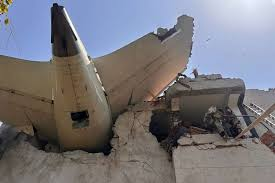
On June 12, 2025, Air India Flight 171, a Boeing 787‑8 Dreamliner, took off from Ahmedabad at ~08:07 UTC, bound for London Gatwick with 230 passengers and 12 crew aboard The Economic Times+14Wikipedia+14The Guardian+14. Almost immediately, both engines lost power. Within about 30–40 seconds, the aircraft deployed its Ram Air Turbine (RAT), but crashed into a nearby medical college hostel, tragically killing 260 people (241 onboard and 19 on the ground); only one passenger survived The Guardian+6Al Jazeera+6New York Post+6.
2. Key technical finding – fuel‑cutoff switch movement
The seminal revelation in the preliminary AAIB report was that, within one second, engine fuel‑control switches for both engines shifted from RUN → CUTOFF mode during takeoff—cutting fuel flow and causing engine flame‑out The Independent+5AP News+5AP News+5. Seconds later, the switches were moved back to RUN, triggering FADEC‑assisted relight—but too late: only one engine partially relit before impact YouTube+15Wikipedia+15The Guardian+15.
3. Cockpit voice recorder – confusion onboard
The cockpit voice recorder captured a tense exchange:
“Why did you cut off?”
“I did not do so.”
This pointed to significant confusion in the cockpit, with each pilot denying responsibility Wikipedia+11The Guardian+11Al Jazeera+11. A Mayday call followed just prior to impact AP News+5The Guardian+5People.com+5.
4. Switch design & mechanical factors
Fuel‑cutoff switches on Boeing aircraft are guarded and require deliberate action to operate, making accidental movement highly unlikely Wikipedia+10The Times+10The Guardian+10. In December 2018, the FAA issued an advisory about potential disengagement of the locking feature on Boeing 737 switches—a design also used on the 787, but compliance was voluntary. Air India did not inspect these switches following the advisory YouTube+4The Guardian+4Barron’s+4.
5. Emergency response & RAT deployment
Following engine flame‑out, the aircraft automatically deployed the Ram Air Turbine to provide emergency hydraulic and electrical systems, and the Auxiliary Power Unit (APU) initiated auto‑start. These safety protocols worked, but could not fully restore thrust in time Reuters+2Al Jazeera+2The Economic Times+2.
6. Pilot experience & conditions
- Captain Sumeet Sabharwal: ~15,600 flight hours (including ~8,600 on 787)
- First Officer Clive Kunder: ~3,400 flight hours (~1,100 on 787) The Independent+3Wikipedia+3Reuters+3
- No adverse weather, no dangerous cargo, satisfactory fuel quality, and CCTV footage showed RAT deployment The Guardian+1The Economic Times+1.
- Both underwent pre‑flight alcohol tests and were deemed fit The Guardian+1The Guardian+1.
7. No mechanical fault in airframe or engines
Investigators found no evidence of mechanical failure in the Boeing 787 or GE GEnx‑1B engines The Times. No airworthiness directives were recommended, and Boeing and GE have been exonerated thus far The Independent+1The Guardian+1.
8. Next steps – ongoing investigation
- Detailed analysis of black‑box data, aircraft maintenance records, and component examinations will continue .
- Authorities are reviewing whether the fuel‑cutoff switches might have been moved as a result of pilot error, system malfunction, or their mechanical design AP News+9The Guardian+9New York Post+9.
- DGCA has also ordered fleet‑wide inspections of Air India’s 33 Dreamliners Wikipedia+9Wikipedia+9AP News+9.
9. Reactions & public response
- Pilots’ union (ALPA‑I) criticized the report for prematurely suggesting pilot error The Independent.
- Victims’ families expressed dissatisfaction with the report’s “vague” tone and demanded truth and closure The Guardian+1The Guardian+1.
- Regulators from the UK and the U.S. NTSB have pledged support and oversight .
10. Summary table: Key facts at a glance
| Topic | Details |
|---|---|
| Date & Location | June 12, 2025 — Ahmedabad Airport (India) |
| Aircraft | Boeing 787‑8 Dreamliner (VT‑ANB), ~11 years old |
| Fatalities | 260 total (241 onboard, 19 on ground), 1 survivor |
| Primary finding | Fuel‑cutoff switches moved to CUTOFF, starving engines |
| Cockpit confusion | Pilots unaware of who triggered the switch |
| Mechanical failure | None in airframe or engines |
| Ongoing investigations | Deep dive into switch origins, cockpit procedures, design flaws |
| Public & institutional response | Mixed reactions; union outcry, family grief, global regulatory review |
Concluding thoughts
The AAIB’s preliminary report reveals a chilling scenario: a sudden fuel starvation event triggered by the fuel‑cutoff switches, leading to catastrophic engine failures mere seconds after takeoff. With no mechanical fault found yet, the origin of these switch movements remains the most baffling mystery.
The path ahead depends on a final report—likely released within a year—exploring whether this was human error, mechanical defect, or perhaps a combination. Whatever emerges, it’s vital that airlines and regulators worldwide learn from this tragedy to enhance cockpit design, training, and safety protocols, in honor of those lost.


