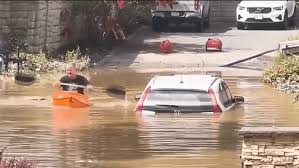
Flash floods — intense, fast-moving floods that strike within hours of heavy rainfall — have been surging globally in recent years. From the streets of New York to the riverbanks of Pakistan, nations are grappling with sudden torrents that leave behind trails of destruction, death, and displacement.
But what’s behind this increase — and how much are we really losing? Let’s explore the causes, then quantify the impact.
1. Climate Change: Supercharging Storms
The atmosphere is warmer than ever. For every 1°C rise in temperature, the air can hold 7% more moisture, resulting in heavier and more frequent rainfalls. These “cloudbursts” overwhelm natural and man-made drainage systems.
Notable Losses:
- Germany & Belgium (2021): Over 220 people died, and damages topped $40 billion USD.
- Pakistan (2022): Over 1,700 lives lost, with over $30 billion in damages, including crops, homes, and roads.
2. Urbanization and Poor Drainage
Cities today are dominated by concrete, which prevents water absorption, funneling rainfall straight into roads and homes.
Urban Losses:
- New York City (2023): Flash floods damaged subways, homes, and businesses. Estimated cost: $2 billion USD.
- Jakarta, Indonesia (2020–2024): Repeated flooding affected over 1 million people yearly, causing billions in economic damage, and pushing the government to relocate the capital.
3. Deforestation and Land Misuse
With fewer trees and plants to soak up rain, water rushes across land, often turning into destructive flash floods and mudslides.
Consequences:
- India (Himalayas, 2023): Cloudburst-triggered floods destroyed entire villages. Over 300 deaths, and infrastructure losses over $1.5 billion.
- Brazil (Petrópolis, 2022): Landslides and floods killed over 230 people and left thousands homeless.
4. More Frequent Extreme Weather Events
Unpredictable rainfall patterns and sudden storms are increasing in intensity due to climate shifts.
Global Toll:
- Sudan (2022): Flash floods killed over 100 people, destroyed tens of thousands of homes, and affected 3 million people.
- South Korea (2023): Worst rainfall in 115 years killed over 45, damaged crops and roads worth $800 million.
⛏️ 5. Mining, Fracking, and Land Disruption
Industrial activities weaken soil and disrupt natural water paths.
- In Southeast Asia, illegal mining operations in floodplains caused flash floods and landslides.
- Losses: Not just lives and homes, but entire ecosystems, and contamination of water sources.
6. Coastal Flash Flooding and Sea-Level Rise
Storm surges, high tides, and rainfall now occur together, overwhelming low-lying cities.
Coastal Impact:
- Bangkok & Manila: Regular flash flooding costs hundreds of millions yearly in lost productivity, destroyed roads, and health crises.
- Miami, Florida (USA): “Sunny day” floods combined with storms have cost over $1.3 billion in infrastructure upgrades and counting.
7. Lack of Early Warning Systems
In low-income countries, the absence of timely warnings turns survivable floods into tragedies.
Human Losses:
- Haiti (2023): Sudden flooding killed over 40 people in a single night due to zero alerts.
- Uganda (2022): Flash floods swept through villages, killing 30+ people and wiping out homes and food supplies.
Summary of Global Flash Flood Losses (Recent Years)
| Country | Deaths | Economic Loss (USD) |
|---|---|---|
| Pakistan (2022) | 1,700+ | $30+ billion |
| Germany (2021) | 220+ | $40 billion |
| Brazil (2022) | 230+ | $2 billion |
| US (Various) | 100+ | $10+ billion |
| India (2023) | 300+ | $1.5+ billion |
(Approximate figures based on UN, IMF, and national reports)
Can We Adapt and Prevent Future Losses?
We can’t eliminate flash floods, but we can reduce their impact by:
- Building green infrastructure (bioswales, retention ponds)
- Installing early warning systems
- Improving urban planning and drainage
- Reforesting watersheds
- Adopting global policies to mitigate climate change
Final Thoughts
Flash floods are no longer local disasters — they’re global phenomena, growing in frequency, intensity, and cost. The water may recede in hours, but the economic scars, displaced families, and lives lost take decades to recover.
We must respond — not just with aid and cleanup, but with smart planning, global cooperation, and climate action.