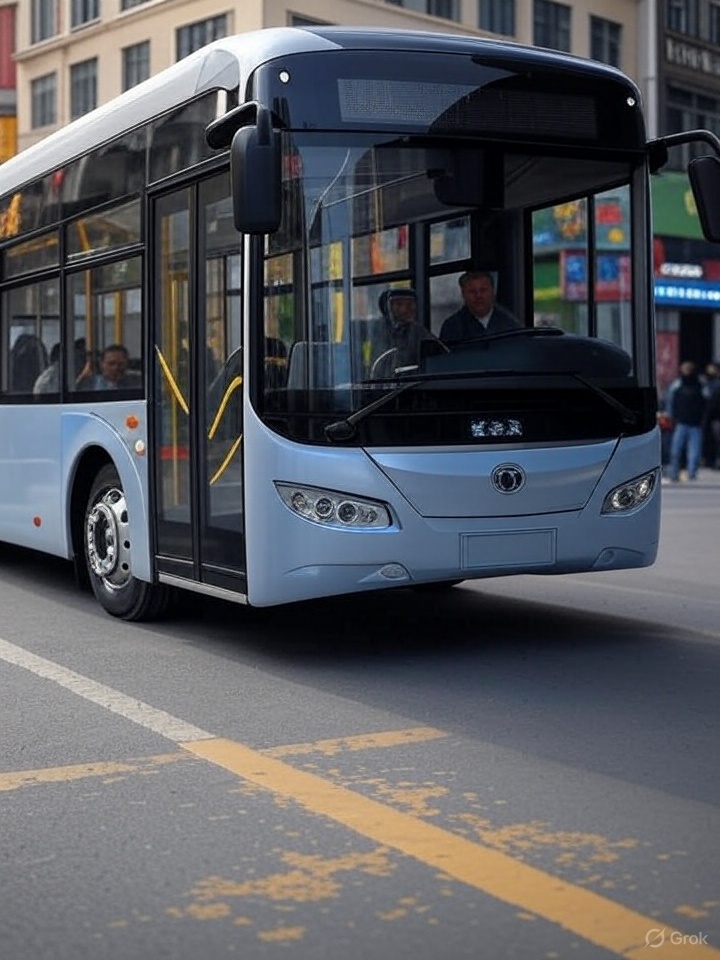
China’s e-bus story is one of speed, scale, and stubborn iteration. In just over a decade, it went from small pilots to running the world’s first fully electric citywide bus fleets—then turned that know-how into an export machine. Here’s how it happened, what made it work, and where it’s headed next.
1) Seeds (2009–2012): Policy first, buses second
China didn’t stumble into e-buses—it built the market with policy. The central government launched “Ten Cities, Thousand Vehicles” in 2009, nudging major metros to deploy NEVs (new energy vehicles) with hefty central subsidies that cities had to match, plus tax breaks on NEV buses. This de-risked early adoption for operators and manufacturers and created predictable demand for local OEMs. DieselNetChina Buses
Why it mattered: predictable volumes let builders like BYD and Yutong invest in platforms, batteries, and charging from day one.
2) Scale-up (2013–2017): Shenzhen proves full-fleet electrification
If policy planted the seed, Shenzhen made it bloom. Between 2011 and 2017 the city replaced every diesel bus—16,300+ vehicles—with battery-electric, the world’s first full e-bus conversion of a megacity fleet. The rollout bundled vehicles + depots + 8,000 charge points at 510 stations, and once complete, ridership ticked up and operating emissions plunged. indiasmartgrid.orgArchitectural DigestIEA Blob Storage
Why it mattered: Shenzhen proved e-buses can run at city scale when charging, routing, and maintenance are co-designed—not tacked on.
3) Consolidation (2017–2020): China owns the category
With the model proven, adoption spread nationwide. By 2020 China accounted for ~90% of global e-bus sales, thanks to “buy-domestic” tech, maturing depots, and falling battery costs. Manufacturers standardized platforms (e.g., BYD K-series with LFP packs), while cities optimized daytime top-ups and night depot charging to balance grids and schedules. IEAWikipedia
Why it mattered: standardization drove reliability and total cost of ownership (TCO) below diesel on high-utilization routes.
4) Diversification (2021–2024): Beyond megacities, beyond China
As domestic demand cooled and subsidies tapered, the market shifted. China still led, but its share of global e-bus sales fell from ~90% (2020) to ~60% (2023) as other regions caught up—often buying Chinese buses. Export champions (Yutong, BYD) accelerated deliveries, with Yutong’s registrations in Europe surging in 2024, signaling a durable export phase. IEASustainable Bus
Why it mattered: the playbook went global—Chinese OEMs now compete on TCO and delivery speed, not just subsidies.
5) The tech stack that made it work
- Batteries & chemistry: Early fleets leaned on LFP chemistry for thermal stability, long cycle life, and predictable degradation—ideal for heavy daily duty cycles. BYD integrated pack design with bus platforms early (K9 and successors). Wikipedia
- Charging strategy: China favored depot charging (overnight) and opportunity charging (layover top-ups) sized to route length and headways—backed by large utility investments and interagency planning. Shenzhen’s depot build-out is the archetype. IEA Blob StorageArchitectural Digest
- System integration: Cities treated e-buses as infrastructure projects—coordinating transit agencies, utilities, land use (for depots), and finance—rather than as simple vehicle purchases. Case studies highlight ridership and operational benefits when planning is integrated. IEA Blob StorageWorld Resources Institute
6) What China got uniquely right
- Demand certainty via multi-year targets and matched subsidies. 2) Local supply chains for buses, batteries, and power electronics. 3) Grid coordination—charging infrastructure arrived with the buses, not after. Together, these collapsed risk for operators and manufacturers—and created the world’s largest learning curve. DieselNetWIRED
7) The next chapter (2025 and beyond)
- From volume to value: With domestic replacement cycles maturing, growth is steadier; global share declines as others catch up, but Chinese OEMs expand abroad with competitive TCO and rapid delivery. IEASustainable Bus
- Tech mix broadens: Expect incremental gains in LFP energy density, more pantograph fast-charge corridors on trunk routes, and selective trials of fuel-cell buses where range and cold-weather heat loads justify them. ICCT
- Replication toolkit: International agencies increasingly cite Shenzhen and other Chinese metros as case studies for finance models, depot design, and route planning—turning China’s decade of iteration into a global how-to. World Resources Institute+1
Quick timeline
- 2009–2012: Pilot era—“Ten Cities, Thousand Vehicles”; big subsidies and tax waivers kickstart NEV buses. DieselNet
- 2013–2017: Scale—Shenzhen electrifies 16k+ buses, builds 8k chargers and 500+ stations. indiasmartgrid.orgArchitectural Digest
- 2018–2020: Consolidation—China dominates global sales, OEM platforms mature (BYD K-series, Yutong). IEAWikipedia
- 2021–2024: Globalization—China’s share of e-bus sales slips as exports surge; Europe, LatAm, India, and the US scale up. IEASustainable Bus
- 2025–: Value & exports—incremental tech, smarter charging, and financing models travel worldwide. World Resources Institute
Bottom line
China didn’t just electrify buses—it industrialized the entire process: policy, product, power, and planning. That head start produced the first zero-emission megacity fleets, rewired global supply chains, and gave the rest of the world a practical blueprint for mass e-bus adoption. The next phase is quieter but deeper: exporting systems, not just vehicles—and making electric buses the default for high-frequency urban transit.