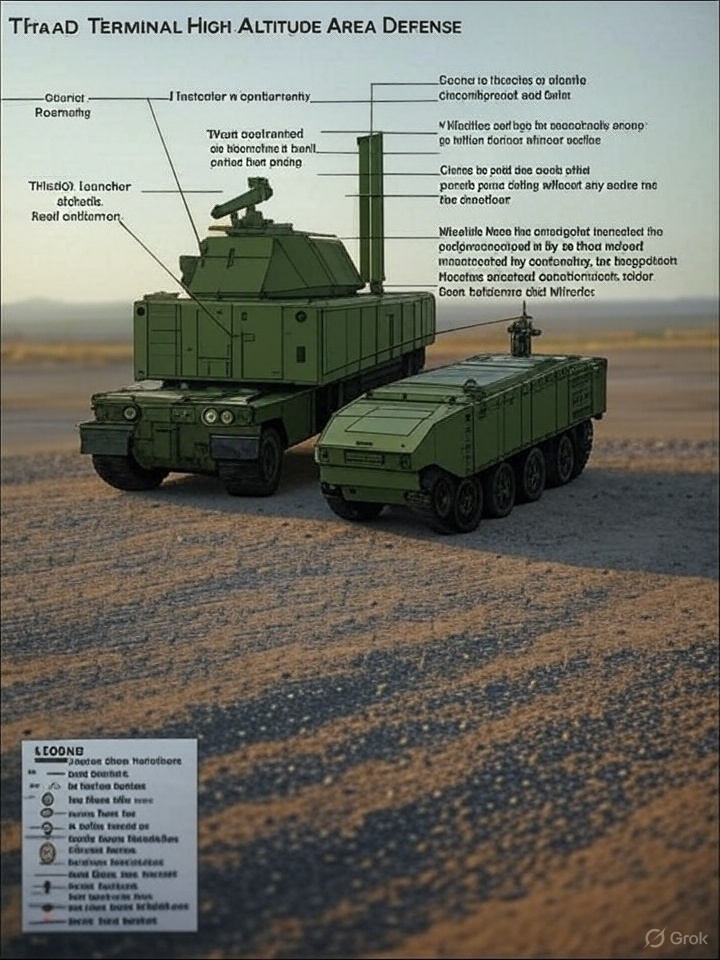
In an age where missile threats are becoming more advanced and unpredictable, modern defense systems have evolved to offer multi-layered protection. Among these, the THAAD system — or Terminal High Altitude Area Defense — plays a critical role in the United States’ and its allies’ missile defense architecture.
What is THAAD?
THAAD is a ground-based missile defense system designed to intercept and destroy ballistic missiles during their final phase of flight — the terminal phase, when the warhead is descending toward its target. It is developed by Lockheed Martin and operated by the U.S. Missile Defense Agency (MDA).
THAAD is primarily intended to counter short-, medium-, and intermediate-range ballistic missiles, both inside and outside the Earth’s atmosphere.
Key Features of THAAD
- Hit-to-Kill Technology
Unlike explosive warheads, THAAD uses kinetic energy to destroy its targets. It literally “hits to kill,” colliding with incoming missiles at high speed, obliterating them without the need for explosives. - High Altitude Interception
THAAD can intercept missiles at altitudes up to 150 kilometers (93 miles), giving it the ability to neutralize threats before they can re-enter the lower atmosphere. - Mobility
The THAAD system is fully transportable and can be rapidly deployed anywhere in the world by air, land, or sea. - Advanced Radar: AN/TPY-2
The THAAD system uses the AN/TPY-2 X-band radar, capable of tracking targets thousands of kilometers away, enabling early detection and precise tracking.
System Components
- Radar Unit (AN/TPY-2): Detects and tracks incoming threats.
- Fire Control and Communications Unit: Processes data and coordinates launch decisions.
- Launcher Units: Each carries up to eight interceptors.
- Interceptor Missiles: Hit-to-kill projectiles that destroy enemy missiles by direct impact.
THAAD in Action
THAAD has undergone extensive testing with a high success rate. It has successfully intercepted dozens of test missiles simulating real threats. Though it has not yet been used in combat, its presence acts as a powerful deterrent.
Global Deployment and Strategic Importance
THAAD has been deployed in multiple strategic locations around the world:
- South Korea: To counter North Korean missile threats.
- Guam: A key U.S. military hub in the Pacific.
- United Arab Emirates (UAE): First foreign customer of THAAD, enhancing Gulf defense.
- Israel and Japan: Have expressed interest in incorporating THAAD into their layered missile defense systems.
These deployments are not just about protection—they also signal geopolitical alliances and deterrence to adversaries.
Why THAAD Matters
- Layered Defense: THAAD is part of a multi-tiered missile defense system, complementing Aegis and Patriot systems to ensure overlapping protection.
- Deterrence: Its deployment can influence adversary calculations and prevent conflict escalation.
- Allied Security: THAAD provides extended coverage, even protecting allied forces and civilians in the region.
Controversies and Challenges
- Political Tensions: THAAD’s deployment in South Korea sparked major diplomatic and economic retaliation from China, which claims the system’s radar could be used to spy on Chinese territory.
- Cost: Each THAAD interceptor costs between $11–$15 million, making it an expensive but crucial investment.
- Saturation Threats: Like other systems, it can be overwhelmed by mass missile attacks if not integrated into a broader defense network.
Conclusion
The THAAD system represents a leap in defensive capability, combining cutting-edge radar, mobility, and precision to counter some of the most dangerous threats in modern warfare. While not without controversy, its strategic value in deterring and defending against ballistic missile attacks is undeniable. In a world facing increasing missile proliferation, systems like THAAD are not just defense tools — they are pillars of national and global security.