
Introduction
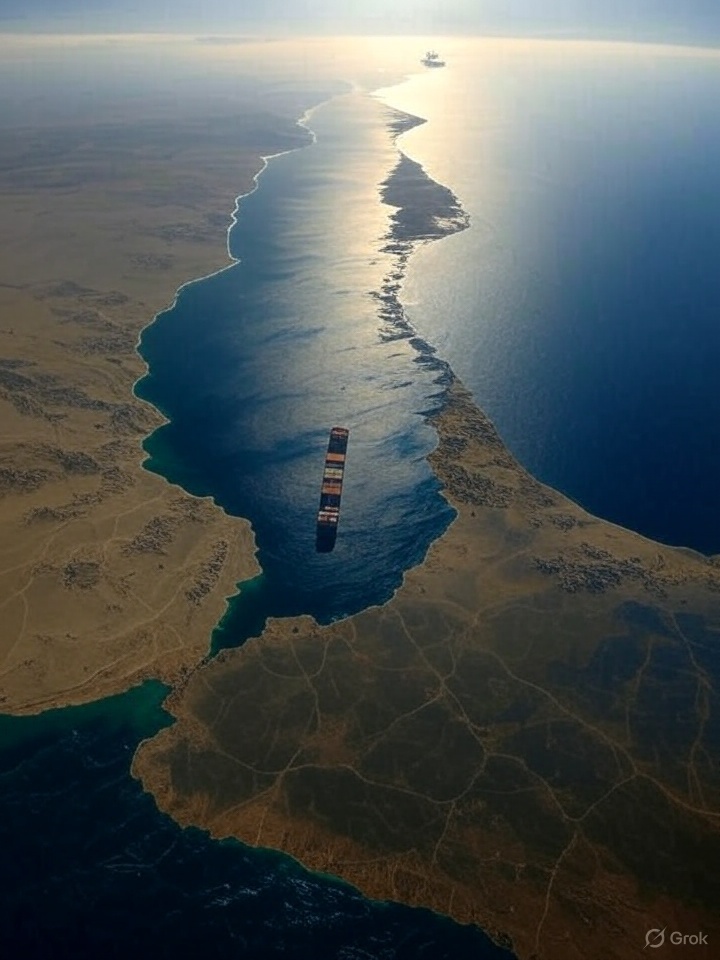
Tucked between the Persian Gulf and the Gulf of Oman lies a narrow, strategic waterway with outsized global importance — the Strait of Hormuz. Despite being just 33 km wide at its narrowest point, this maritime corridor is one of the most vital arteries for global oil transportation. Any disruption in this region can ripple across international markets, sparking geopolitical tensions and economic uncertainty. But why is this strait so significant? Let’s dive into the geopolitical, economic, and strategic dimensions of the Strait of Hormuz.
Geographical Significance
The Strait of Hormuz connects the oil-rich Persian Gulf to the Arabian Sea and beyond. Bordered by Iran to the north and the United Arab Emirates and Oman to the south, the strait serves as the only sea passage from the Persian Gulf to the open ocean.
At its narrowest point, the strait is about 21 miles (33 km) wide, but the shipping lanes are only 2 miles wide in each direction, separated by a 2-mile buffer zone. This makes navigation highly sensitive and subject to strict international regulations.
Why Is It So Important?
- Oil Transit Hub
Roughly 20% of the world’s petroleum passes through the Strait of Hormuz — that’s about 17 million barrels of oil per day on average. Key oil exporters using this route include:- Saudi Arabia
- Iran
- Iraq
- Kuwait
- United Arab Emirates
- Qatar (especially for liquefied natural gas)
- Energy Prices and Global Stability
Any threat to shipping in the strait — whether from military conflict, piracy, or political blockades — can cause oil prices to spike, impacting everything from fuel prices to food costs globally. - Strategic Military Zone
The strait has been a focal point for military tension, particularly between Iran and the United States. Iran has occasionally threatened to close the strait in response to sanctions or military pressure, which would be considered a direct threat to global energy security.
Historical Flashpoints
- 1980s Tanker War: During the Iran-Iraq War, both nations attacked oil tankers in the strait to cripple each other’s economies.
- 2011–2012 Tensions: Iran threatened to block the strait in retaliation to Western sanctions on its nuclear program.
- 2019 Attacks on Tankers: Several oil tankers were damaged or attacked near the strait, raising fears of broader conflict.
Current Geopolitical Landscape
As of recent years, the strait remains a flashpoint in U.S.-Iranian relations. The U.S. Navy routinely patrols the area to ensure freedom of navigation, while Iran has developed anti-ship missile systems and fast-attack craft as a deterrent.
Meanwhile, China and India, both heavily dependent on Gulf oil, are quietly monitoring developments, as any disturbance could affect their energy security.
Future Outlook
The global shift toward renewable energy might reduce dependency on Middle Eastern oil in the long run. However, for the next few decades, the Strait of Hormuz will continue to be a critical juncture for international trade, diplomacy, and energy policy.
Conclusion
The Strait of Hormuz is more than just a body of water; it’s a symbol of how deeply interconnected the world’s economies and politics are. Whether through the lens of energy markets, global diplomacy, or military strategy, what happens in this narrow waterway can affect billions around the world. In an age of global interdependence, the stability of the Strait of Hormuz is a barometer for global peace and prosperity.
Strait of Hormuz, Oil Chokepoint, Persian Gulf, Global Energy, Middle East Tensions, Oil Tankers, Iran-US Relations, Maritime Security


